_edited.png)
Massage Therapy in the Philippines: From Misunderstood Service to a Recognized Profession

Updated: May 1
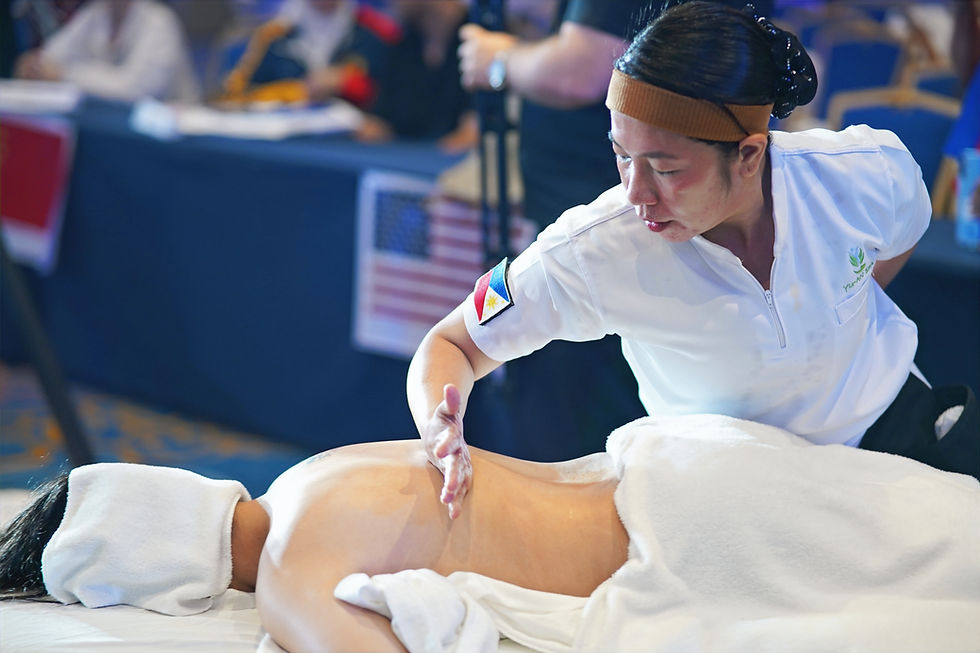
Massage therapy in the Philippines is often perceived as a luxury, something occasional and purely for relaxation.
That perception no longer reflects reality.
Today, massage therapy is part of a growing, structured wellness industry, supported by formal training systems, regulatory standards, and increasing global demand for Filipino therapists. What continues to hold the industry back is not capability, but outdated perception.
The Real Status of Massage Therapy in the Philippines
To understand the industry, it is necessary to look at actual developments rather than assumptions.

Three realities define the current landscape:
Scale – Massage therapy is embedded in wellness, tourism, and healthcare support services.
Demand – Therapists are employed across spas, clinics, hotels, and international placements
Structure – Training and compliance systems are now in place
Massage therapy in the Philippines today is:
Supported by competency-based training under TESDA
Regulated through practitioner compliance and facility standards guided by the Department of Health
Integrated into both local and global service markets
This is no longer an informal service. It is a skill-based profession with standards.

Perception vs Reality: The Industry’s Biggest Challenge
Despite this progress, outdated and at times harmful perceptions persist. Addressing these misconceptions is crucial to building trust and credibility with industry stakeholders, potential investors, and policymakers.
Common misconceptions include:
Massage is only for relaxation.
It is not a legitimate profession.
Formal training is unnecessary.
Income potential is limited.
It is associated with illicit or inappropriate services.
The reality is fundamentally different.
Professional massage therapy requires:
Structured, competency-based training
Technical knowledge of body mechanics and pressure control
Adherence to ethical, safety, and operational standards
Legitimate establishments operate within:
Training systems aligned with TESDA.
Compliance standards guided by the Department of Health
The association with illicit services originates from unregulated operators, not from the profession itself.
The issue is not massage therapy; it is the absence of standards in certain parts of the market.
Why This Misconception Matters
This misconception has direct consequences:
It undermines the credibility of trained therapists.
It discourages individuals from entering the profession.
It shifts the competition toward price rather than quality.
It forces legitimate businesses to constantly reinforce compliance.
The result is a fragmented industry where demand is high, but perception remains low.
The Industry Shift: Standards Are Redefining the Profession
The transition is already underway.
Organizations investing in training, compliance, and professional systems are redefining massage therapy as a discipline rooted in standards, not perception.
Established in 2010, YUAN SPA Exemplifies industry development by focusing on training, compliance, and workforce growth, fostering confidence among stakeholders in the sector's professionalism and standards.
Accredited TESDA- EBET Training Center
YUAN SPA is an accredited Enterprise-Based Education and Training (EBET) center aligned with TESDA.
This ensures:
Training is conducted in a real spa environment.
Therapists gain hands-on, client-based experience.
Skills are aligned with actual industry requirements.
Training to employment path.
DOH-Compliant Practice and Accredited Operations
YUAN SPA operates with:
Practitioners meet compliance requirements.
Facilities aligned with standards set by the Department of Health
This includes:
Sanitation and hygiene protocols
Client safety procedures
Consistent service standards
Compliance is embedded into operations to ensure safe, ethical, and professional service delivery.
Global Standards and Competitive Exposure
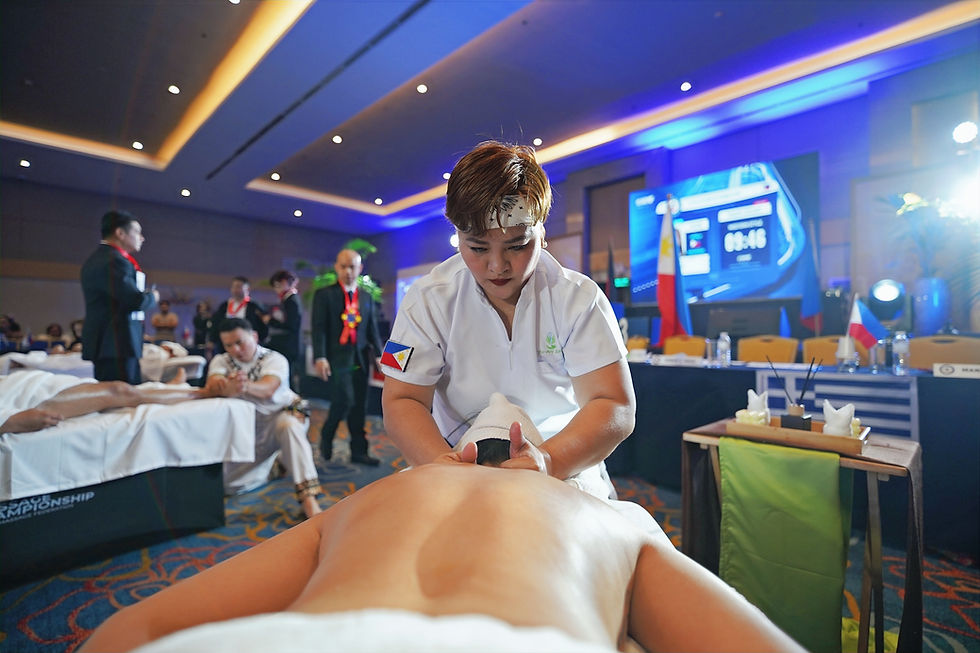
Participation in international competitions demonstrates the level of technical precision, control, and consistency required in professional massage therapy. These platforms apply standardized criteria, reinforcing the role of training and discipline in delivering measurable performance outcomes.

The Eastern Freestyle category highlights fluid, integrative techniques rooted in traditional Eastern practices. It assesses rhythm, transitions, body mechanics, and the therapist’s ability to integrate movement, stretching, and energy flow into a cohesive, technically controlled sequence.
YUAN SPA aligns its training and professional standards with those of global organizations, such as the World Massage Federation.
Participation in competitions strengthens:
Technical precision
Professional discipline
Global competitiveness
👉 View verified competition participation and event highlights:
The Future of Massage Therapy in the Philippines
The direction of the industry is clear:
Demand for certified therapists will continue to increase.
Training systems will become more structured.
Regulatory expectations will strengthen.
Global opportunities for Filipino therapists will expand.
Massage therapy is increasingly recognized as part of the formal wellness and preventive care sector.
Conclusion
Outdated perceptions no longer define massage therapy in the Philippines.
Training, standards, compliance, and measurable demand define it.
As the industry evolves, the distinction between informal practice and professional service will become more evident and more important.
YUAN SPA integrates:
TESDA-aligned EBET training
DOH-compliant operations
Global exposure and continuous skill development
Massage therapy, done right, is a profession, not just a service.
Frequently Asked Questions
Is massage therapy regulated in the Philippines?
Yes. Training is aligned with TESDA standards, and establishments follow Department of Health guidelines.
Is massage therapy a good career?
Yes. There is strong demand for trained therapists, both locally and internationally.
What is EBET training?
Enterprise-Based Education and Training (EBET) allows trainees to learn in real workplace environments, improving job readiness.
About The Author
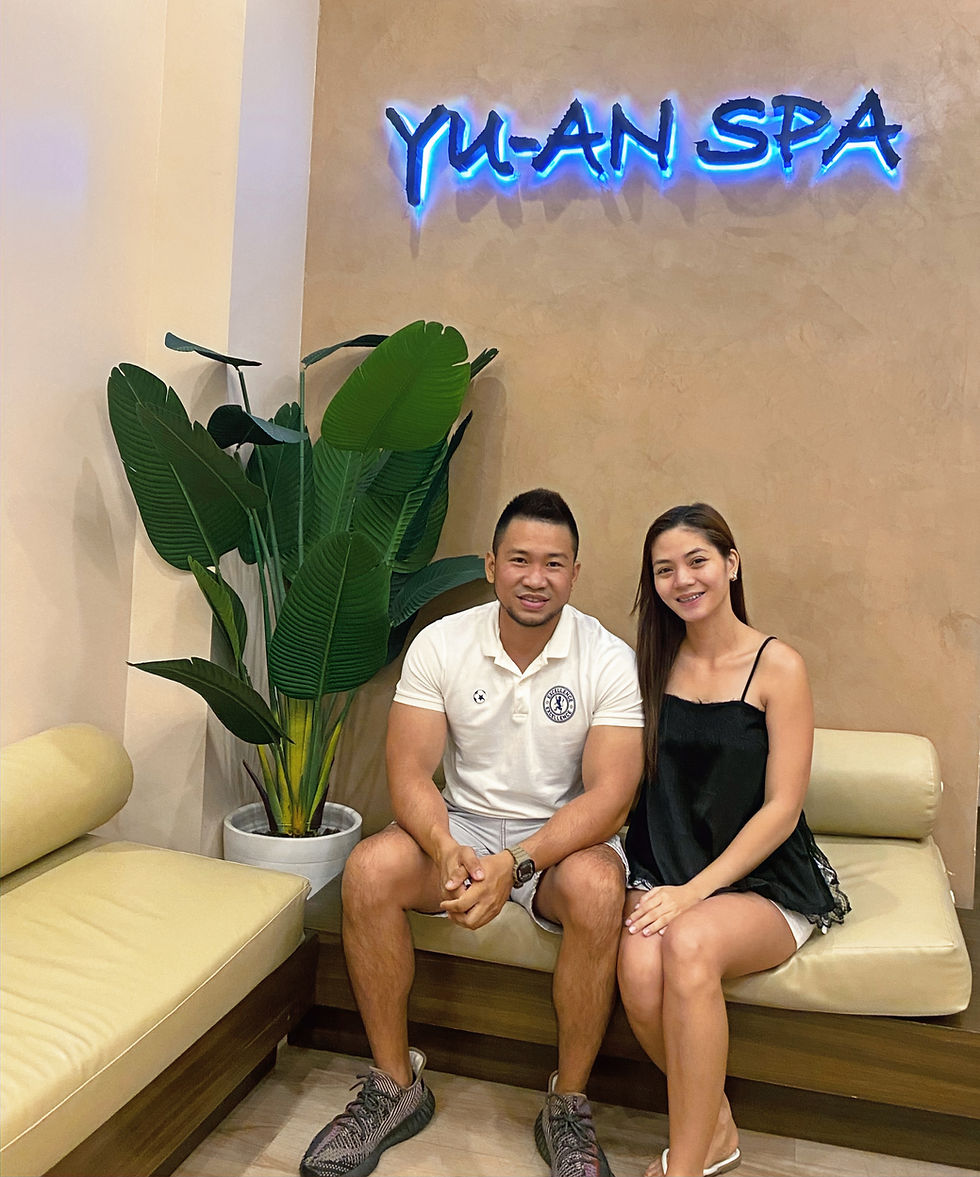
Juan Carlo Arao, MBA, is the co-owner of YUAN SPA, a DOH-compliant wellness establishment and TESDA-accredited EBET training center established in 2010. With over a decade of experience in spa operations, training development, and industry partnerships, he focuses on elevating professional standards in massage therapy in the Philippines.


Comments